
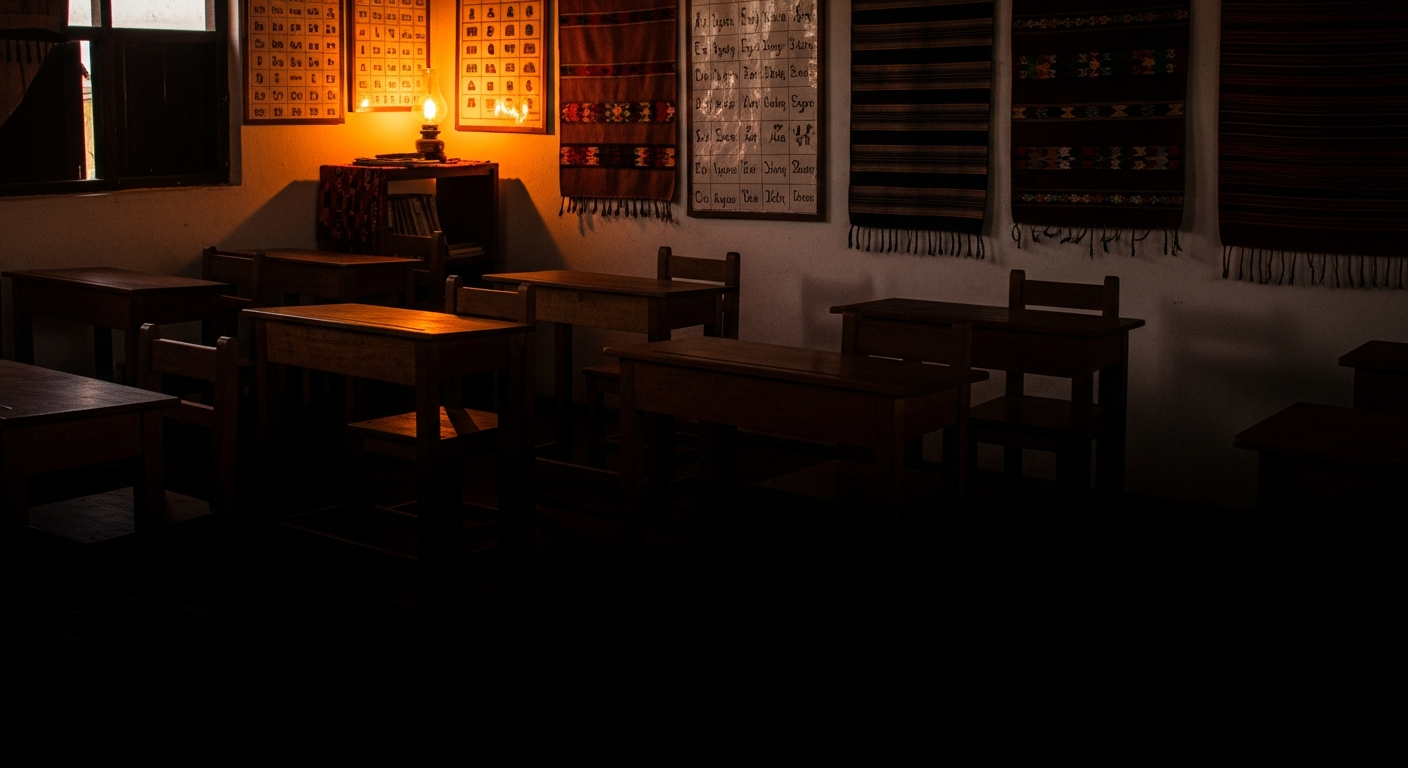
In a small classroom on the Big Island of Hawai’i, a three-year-old greets her teacher entirely in ʻōlelo Hawaiʻi — the Hawaiian language. Her parents don’t speak it. Her grandparents don’t speak it. But she does, because she attends a Pūnana Leo, a “language nest” where Hawaiian isn’t a subject to be studied but the medium through which everything is experienced: counting, singing, arguing over toys, learning the names of birds. This child is part of one of the most remarkable language revitalisation stories of the modern era — and she is not alone.
The Language Nest Model
The concept of the language nest originated in Aotearoa New Zealand in the early 1980s, when the Māori community confronted a stark reality: the number of fluent te reo Māori speakers had plummeted, and young people were growing up without the language. The response was the Kōhanga Reo — literally “language nest” — an immersion programme for children from birth to school age, where only te reo Māori is spoken. Elders served as primary caregivers and language models, transmitting not just vocabulary but the cultural knowledge embedded within it.
The results were transformative. Within a decade, thousands of children were entering primary school as fluent Māori speakers, many of them the first in their families in generations. The model demonstrated a principle that linguists had long theorised but rarely seen in practice: if you can create an environment where children acquire an endangered language naturally, as a first language rather than a foreign one, you can produce a generation of speakers capable of passing it on.
Hawai’i’s Pūnana Leo: From 2,000 to 18,700 Speakers
Inspired by the Māori model, Hawaiian language advocates launched the first Pūnana Leo preschool in 1984. The situation was dire: by the 1970s, only about 2,000 people still spoke Hawaiian, most of them elderly residents of the isolated island of Ni’ihau. The language had been banned in schools following the overthrow of the Hawaiian monarchy in 1893, and generations had grown up believing it was a relic with no place in modern life.
The Pūnana Leo programme changed that trajectory. Today, 11 Pūnana Leo preschools and 20 Hawaiian immersion and medium schools operate across the state, serving some 2,500 students. The number of Hawaiian speakers has risen to approximately 18,700. As Professor William Wilson, one of the programme’s founders, has noted, children who enter the language nests generally arrive without Hawaiian but become quite fluent over their two years in the programme. Many continue into Hawaiian-medium elementary and secondary education, emerging as fully bilingual adults.
This is not merely a linguistic achievement. Hawaiian immersion students consistently perform at or above state averages on standardised tests conducted in English — a finding that has helped dispel the persistent myth that immersion education comes at the cost of academic competence in the dominant language.
Ojibwe: “Children Are Bringing This Language Home”
Around 2000, two Ojibwe immersion schools opened in the American Upper Midwest: Wicoie Nandagikendan in the Twin Cities of Minnesota and Waadookodaading Ojibwe Language Immersion School in northern Wisconsin. Both began small, with limited funding and a handful of dedicated teachers. Fourteen years later, both have survived and grown, building the infrastructure needed to sustain immersion education across grade levels.
What the Ojibwe schools have demonstrated extends beyond the classroom. As parents and community members hear young children speaking their Native language, adults are inspired to learn alongside them. Educators report that families consistently express how meaningful it is “when their children are bringing this language home that was forbidden or shamed for generations.” The intergenerational reversal — children teaching parents — inverts the usual pattern of language loss and creates new social momentum for revitalisation.
Lakota: Starting at Birth
On the Pine Ridge Reservation in South Dakota, Peter Hill founded Lakota Immersion Childcare with an urgent awareness: “We are down to 2,000 Lakota speakers worldwide, and down to about 1,000 on Pine Ridge.” His approach starts even earlier than preschool, immersing infants and toddlers in Lakota from birth. The premise is grounded in neurolinguistics: the earlier a child is exposed to a language, the more naturally they acquire its phonological system, grammar, and pragmatics.
Research supports this urgency. Studies have shown that learning an indigenous language from a very young age may prepare Native American children for broader academic success, with benefits extending to families and communities. Language acquisition becomes a gateway not just to cultural identity but to cognitive development, social confidence, and a sense of belonging that measurably improves life outcomes.
Keres and Cherokee: Expanding the Model
At the Cochiti Pueblo in New Mexico, the Keres Children’s Learning Center launched its first immersion classroom with 10 children aged two and a half to six. After three successful years, families understood that the next step was extending immersion into elementary education, which began in 2015. The programme now offers a dual-language model that develops literacy in both Keres and English, treating the indigenous language not as a supplement but as a co-equal medium of instruction.
Cherokee Nation has taken a similar path, establishing a dedicated immersion charter school and developing Language Arts curricula for students through eighth grade. These programmes represent a significant institutional investment — not just in teaching materials but in training a pipeline of fluent educators who can sustain the model for decades.
Scaling What Works
The evidence is clear that immersion works. But scaling it remains a challenge. The First Nations Development Institute has awarded 62 grants totalling over $5 million since 2017 to grow and strengthen 39 Native language immersion programmes across the United States. The federal government’s 10-Year National Plan on Native Language Revitalisation proposes funding 100 new K-12 immersion schools — an ambitious target that, if achieved, would represent the largest coordinated investment in Indigenous language education in American history.
The greatest bottleneck is human: there are simply not enough fluent speakers trained as educators. Many remaining fluent speakers are elders who may lack formal teaching credentials, while younger certified teachers may lack fluency. Bridging this gap requires flexible credentialing, elder-teacher partnerships, and sustained community commitment measured not in grant cycles but in generations.
Yet the language nests have proven something that policy documents and academic papers cannot fully capture: the sight and sound of children speaking a language their great-grandparents were punished for using is itself a form of justice. It is history running in reverse, and it is happening — classroom by classroom, word by word — in communities across the Pacific, the Great Lakes, the Great Plains, and beyond.